Can a single endpoint tell you how potent a cancer immunotherapy really is?
Two immunotherapy candidates can produce similar levels of cytolysis at a selected endpoint but follow very different response profiles. One may begin killing cancer cells sooner or sustain its cytotoxic response longer—differences that a single snapshot may not reveal.
In this video, see how real-time, label-free impedance assays continuously measure immune cell-mediated killing in vitro, capturing both the magnitude and kinetics of the response. By following target cancer cells throughout the experiment, researchers can assess how quickly immune cells kill, how much cytolysis occurs, and whether the response persists over time.
What will you learn?
- What an in vitro immunotherapy potency assay should measure
- Why endpoint cytotoxicity assays may miss important response kinetics
- How impedance detects changes in cancer cell viability without labels
- How percent cytolysis is calculated during immune cell-mediated killing
- Why both acute and chronic responses matter when evaluating potency
- How continuous measurements can support CAR T, NK cell, and other immunotherapy studies
What should an in vitro immunotherapy potency assay measure?
An in vitro immunotherapy potency assay should provide quantitative information that researchers can use to rank therapeutic candidates, inform their design, and evaluate consistency and performance.
For cell-based immunotherapies, this means understanding more than whether cancer cells are alive or dead at one predetermined endpoint. The speed, magnitude, and duration of immune cell-mediated killing can all contribute to the assessment of potency.
Capturing these dynamics requires an assay that can follow the interaction between immune effector cells and target cancer cells over time.
The limitations of endpoint cytotoxicity assays
Commonly used cytotoxicity assays, including chromium release, LDH, and MTT assays, rely on labels or dyes and provide measurements at selected timepoints.
These endpoint measurements offer a snapshot of the response. If the selected endpoint does not align with an important stage of the treatment response, the measurement may not fully represent the therapy's effectiveness.
Researchers can collect additional endpoints using more plates, cells, reagents, and time, but this increases the cost and complexity of the experiment.
A continuous assay provides another approach by following the same culture throughout the response and making each measured timepoint available for analysis.
How does impedance measure immune cell-mediated killing?
Bioelectronic assays use electrodes embedded in the culture surface to measure cellular impedance noninvasively.
Small electrical signals are passed between the electrodes. When adherent cells are present on the electrode surface, they impede those signals. Changes in the cell population therefore produce measurable changes in impedance.
In an immunotherapy potency assay, target cancer cells are first added to the well. As the cells attach, grow, and divide, impedance increases. Immune effector cells, such as CAR T or NK cells, are then introduced to the culture.
As the effector cells kill the target cancer cells, impedance decreases. Following that signal continuously provides a real-time measurement of immune cell-mediated cytotoxicity without requiring labels.
Researchers studying specific effector-cell approaches can explore applications for CAR T cell-mediated killing and NK cell-mediated killing.
Quantifying cytolysis in real time
Impedance measurements can be converted into percent cytolysis by comparing experimental wells with untreated and fully lysed controls.
Because data are collected continuously, researchers can access each timepoint across the experiment rather than relying on a single endpoint.
This makes it possible to characterize several dimensions of immune cell-mediated killing:
- How quickly effector cells begin killing target cells
- How much of the target cell population is killed
- How long the cytotoxic response persists
Together, these measurements provide a kinetic view of potency and make it possible to compare therapeutic responses over time.
Why do cytotoxicity kinetics matter for immunotherapy potency?
Two immunotherapy candidates can produce similar results at a single endpoint while reaching that endpoint through different response profiles.
Continuous monitoring can reveal differences in the onset, magnitude, and duration of cytotoxicity that may be difficult to identify from a single measurement.
Long-term measurements are also important when evaluating immune cell function. As described in the webinar, immune cell exhaustion may reduce potency over time and allow cancer cell populations to recover.
Monitoring both acute and chronic responses therefore provides a more complete view of how an immunotherapy performs throughout the experiment.
Real-time impedance assays for immunotherapy research
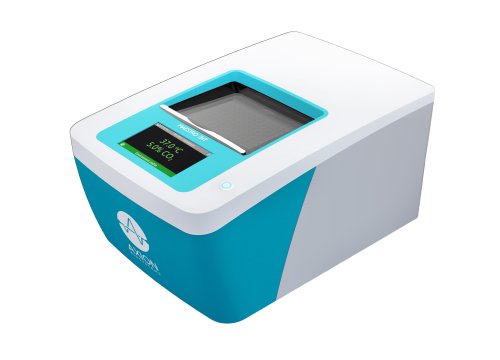
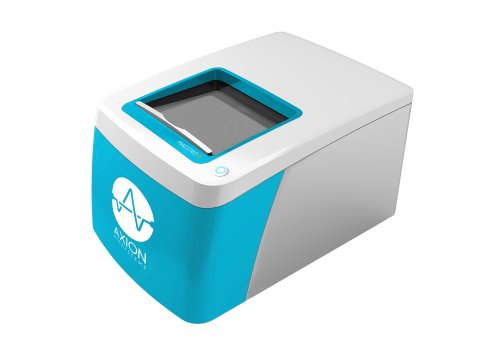
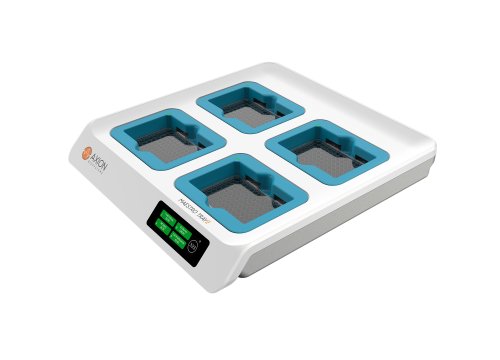
The Maestro ZHT platform uses impedance-based bioelectronic sensing to continuously monitor changes in cell behavior without labels.
For immunotherapy potency assays, this approach enables researchers to:
- Measure the magnitude and kinetics of immune cell-mediated killing in real time
- Detect changes at physiologically relevant effector-to-target cell ratios
- Monitor up to 384 wells continuously
- Reduce reliance on destructive labels and dyes
- Analyze multiple stages of the treatment response from a single experiment
Rather than selecting a single endpoint before the experiment begins, researchers can examine the complete time course and quantify the dynamics most relevant to the therapy being evaluated.
Moving beyond a snapshot of immunotherapy potency
In vitro potency assays need to distinguish between therapeutic candidates and characterize how effectively immune cells kill their cancer targets.
Continuous impedance measurements add a kinetic dimension to this analysis by revealing when cytotoxicity begins, how much killing occurs, and whether the response persists. This provides researchers with a noninvasive way to characterize complex immune cell-cancer interactions throughout an experiment.
Watch the video to learn how real-time, label-free impedance assays can be used to quantify immune cell-mediated killing and evaluate cancer immunotherapy potency.
For research use only. Not for use in diagnostic procedures.