Authors: Tim Fieblinger, Judith Rudolph, Kerstin Müller, Petra Friess, Nicole Weigelt, Christina Thiede, Simone Modolo, Denise Federico, Malik Majandinow, Federico Tinarelli, Vivian J.A. Costantini, Pier P. Marrese, Annalisa Mercuri, Nikisha Carty, Ana Christina Gomes, Maria A. Whitehead, Philip A. Gerrard, Chrisovalantis Papadopoulos, and Paul Elvin
iScience, 17 April 2026
Maestro MEA enables functional screening of repurposed compounds to rescue network dysfunction in PHTS models.
PTEN hamartoma tumor syndrome (PHTS) is a rare genetic disorder caused by mutations in the PTEN gene, often associated with developmental abnormalities, autism spectrum features, and a high prevalence of epilepsy. While current treatments such as mTOR inhibitors address some aspects of the disease, they do not effectively target the neurobehavioral and network-level dysfunction that underlies many neurological symptoms.
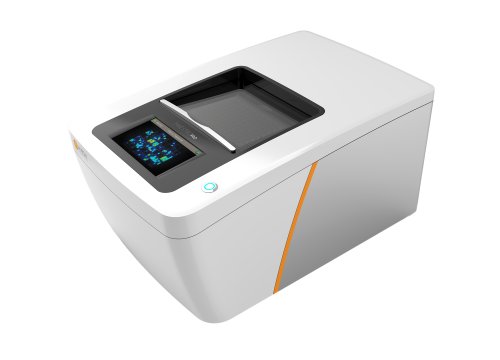
In this study, researchers developed a drug-repurposing strategy to identify compounds that could restore neuronal function in PHTS. Using human neuron models, they first characterized a disease-relevant phenotype marked by altered network dynamics, including changes in burst structure and excitability. The team then used Axion’s Maestro Pro MEA platform to functionally screen 17 candidate compounds, measuring their ability to modulate neuronal activity and rescue disease-associated phenotypes.
This approach enabled identification of compounds that improved network behavior, demonstrating the value of functional electrophysiology in prioritizing therapeutics. Together, these findings highlight the potential of MEA-based screening to accelerate drug repurposing efforts and address unmet needs in neurological disorders like PHTS.