Authors: Vukasin M. Jovanovic, Narisu Narisu, Lori L. Bonnycastle, David Castellano, Seungmi Ryu, Ravi Tharakan, Kendall T. Mesch, Qiang Chen, Fahrünisa Meryem Betül Erol, Hannah J. Glover, Tingfen Yan, Neelam Sinha, Chaitali Sen, Shu Yang, Dvir Blivis, Daniel F. Bennett, Giovanni Rosales-Soto, Jason Inman, Pinar Ormanoglu, Christopher A. LeClair, Natalie D. Shaw, Menghang Xia, Martin Schneider, Erick O. Hernandez-Ochoa, Michael R. Erdos, Anton Simeonov, Shuibing Chen, Francis S. Collins, Claudia A. Doege, and Carlos A. Tristan
Stem Cell Reports, 14 July 2026
Axion MEA recordings show that stem cell-derived hypothalamic neurons generate reliable network activity and respond functionally to insulin stimulation.
The hypothalamus plays a central role in energy balance, glucose regulation, and metabolic homeostasis, but scalable human models of hypothalamic neurons have been difficult to establish. In this study, researchers developed a chemically defined, scalable protocol for differentiating human pluripotent stem cells into hypothalamic neurons enriched for pro-opiomelanocortin (POMC) cells, with compatibility for robotic cell culture and high-throughput applications.
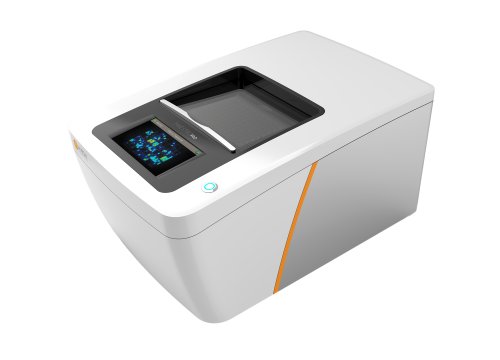
Using Axion BioSystems’ MEA platform, the team measured functional activity in the differentiated hypothalamic neurons and assessed their response to insulin, a key hormonal signal involved in appetite and metabolic regulation. After maintaining cultures in reduced-insulin conditions, the researchers added increasing doses of insulin and observed a significant dose-dependent increase in mean firing rate. This functional response was validated across multiple hPSC lines using low and high insulin concentrations. Importantly, spike counts and mean firing rate remained consistent from DIV 28 to DIV 35, identifying a 7-day window of high assay reliability.
Together with transcriptomic, epigenomic, and single-cell analyses confirming hypothalamic identity and metabolic disease-relevant features, the MEA data demonstrate that these scalable hypothalamic neuron cultures are not only molecularly defined, but functionally responsive to metabolic cues. This platform provides a human-relevant model for studying metabolic disorders, obesity, type 2 diabetes, and therapeutic responses to hormonal and humoral stimuli.