Authors: Anna R. Tröscher, Despina Tsortouktzidis, Franziska Ammer-Pickhardt, Manuel Penzenleitner, Martin Aichholzer, Philip-Rudolf Rauch, Tobias Rossmann, Nico Stroh-Holly, Baran Atli, Andreas Gruber, Raimund Helbok, Jan Haubold, Christian Thome, Maren Engelhardt, Tim J. von Oertzen, Susanne Schoch, Albert J. Becker, and Karen M.J. van Loo
Neurobiology of Disease, 11 June 2026
Axion MEA recordings show that HIF1α overexpression increases primary neuron network activity, linking hypoxia response signaling to CaV3.2-associated hyperexcitability.
Hypoxic injury can leave neurons chronically hyperexcitable, contributing to neurological complications such as post-stroke epilepsy, but the molecular pathways connecting oxygen deprivation to persistent changes in excitability remain unclear. In this study, researchers investigated whether hypoxia-inducible factor 1α (HIF1α), a central regulator of cellular responses to low oxygen, contributes to neuronal hyperexcitability by regulating the T-type calcium channel CaV3.2, encoded by Cacna1h.
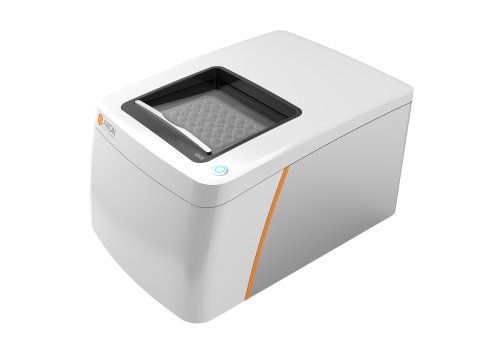
Using Axion BioSystems’ MEA system, the team recorded activity from primary neuronal cultures to assess how hypoxia-related signaling altered network function. Oxygen deprivation followed by reoxygenation increased neuronal firing rate, while hypoxic conditions increased HIF1α and CaV3.2/Cacna1h expression across experimental models. The researchers then showed that HIF1α activation increased Cacna1h expression and promoter activity. In primary neurons, HIF1α overexpression significantly increased weighted mean firing rate, mirroring the hyperexcitable phenotype observed after oxygen deprivation/reoxygenation.
Together, these findings identify a hypoxia-responsive HIF1α–CaV3.2 pathway that promotes neuronal excitability. By connecting molecular regulation of an ion channel with measurable changes in network activity, this work provides insight into mechanisms that may contribute to hypoxia-associated epileptogenesis and points to CaV3.2 as a potential target for future studies of post-hypoxic neuronal hyperexcitability.