Authors: Chrysanthi-Maria Moysidou, Inês Afonso Martins, Ismail Amr El-Shimy, Iacopo Bicci, Donatella Cea, Christina Bukas, Isra Mekki, Mara-Camelia Rusu, Aylin Nebol, Ines Lahmann, Marie Piraud, Enrico Klotzsch, and Mina Gouti
Advanced Science, 22 June 2026
Axion MEA recordings reveal enhanced neuronal excitability and network connectivity in electrically trained human neuromuscular organoids.
Organoids offer powerful human-relevant models for studying development and disease, but incomplete maturation can limit their ability to model adult physiology, late-onset disease, and functional tissue responses. In this study, researchers tested whether chronic electrical pulse stimulation (EPS) could promote maturation in human neuromuscular organoids (NMOs), using low-frequency stimulation during early development to provide bioelectrical cues that are typically absent from organoid culture.
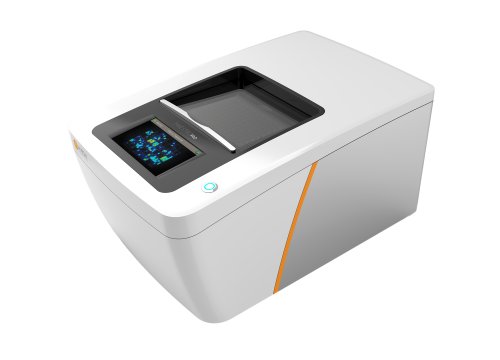
Using Axion BioSystems’ MEA platform, the team recorded activity from NMOs after chronic EPS training and compared them with unstimulated controls. Following glutamate exposure, EPS-trained NMOs showed a significantly reduced mean inter-spike interval between bursts, suggesting enhanced neuronal excitability and more efficient excitatory synaptic transmission. The researchers also observed increased synchronous firing across different EPS-NMO regions, measured by a larger area under the normalized cross-correlation curve.
Together with imaging, transcriptomic, and contraction analyses, these MEA results show that chronic EPS training promotes the formation of more active and highly connected neuronal networks in NMOs. By helping neuromuscular organoids develop stronger functional output and more mature network behavior, this approach could improve the utility of organoid models for studying human neuromuscular development, disease, and therapeutic response.