Authors: Martina Servetti, Giulia Parodi, Martino Caramia, Ennio Nano, Martina Bartolucci, Antonella Marte, Giacomo Mazzoni, Simone Giubbolini, Farah Diab, Andrea Petretto, Pierluigi Valente, Sergio Martinoia, Simona Baldassari, Anna Fassio, Fabio Benfenati, Anna Corradi, and Bruno Sterlini
Cell Death Discovery, 05 June 2026
Axion MEA recordings reveal how culture medium and plating density shape the timing, strength, and stability of human iGluNeuron network maturation.
Human induced glutamatergic neurons generated by NGN2 overexpression are widely used for disease modeling and drug screening, but differences in culture conditions can influence neuronal maturation, network formation, and functional output. In this study, researchers systematically evaluated how extracellular matrix coating, plating density, and culture medium affect iGluNeuron development, testing eight combinations of PEI or PLO coating, BrainPhys or Neurobasal medium, and low- or high-density plating.
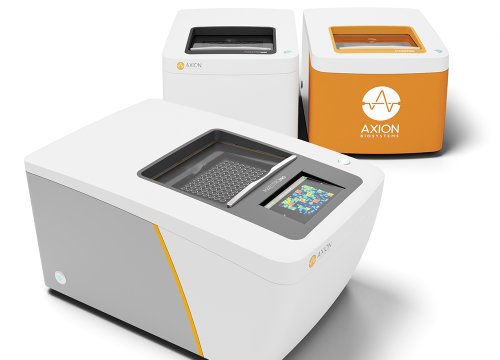
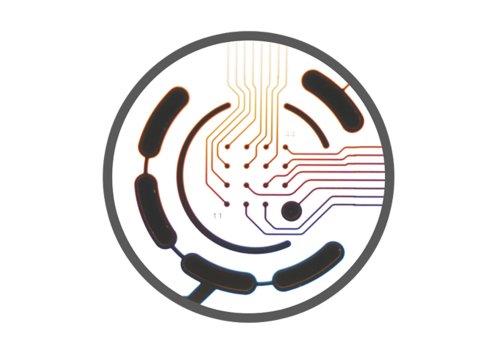
Using Axion BioSystems’ MEA platform, the team tracked neuronal network activity from DIV 7 to DIV 56, measuring mean firing rate, bursting activity, network bursting rate, and related single-channel and network-level features. The results showed that PEI and PLO coatings had little effect on network electrophysiology, while medium and density strongly shaped maturation dynamics. BrainPhys, especially at high density, promoted rapid network maturation but was followed by a functional decline. Neurobasal supported a slower, more sustained developmental trajectory, with Neurobasal low-density cultures showing the most organized network activity, including low random spiking and strong network bursting.
Together with patch-clamp, morphofunctional, and proteomic analyses, the MEA data helped define culture conditions that balance maturation speed with long-term functional stability. By linking culture variables to measurable electrophysiological and proteomic outcomes, this study provides a practical roadmap for optimizing human iGluNeuron models for pathophysiological studies, disease modeling, and drug screening.