Authors: Yejin Koh, Jang-Woon Kim, Yeji Jang, Jaehyuk Han, Yeri Alice Rim, and Ji Hyeon Ju
Stem Cell Research & Therapy, 19 June 2026
Axion MEA recordings show that chronic ethanol exposure suppresses spontaneous and stimulus-evoked activity in human iPSC-derived cortical neurons.
Chronic alcohol consumption is associated with increased risk of cognitive decline and dementia, but its direct effects on human neuronal systems remain incompletely understood. In this study, researchers used human iPSC-derived cortical neurons, cortical spheroids, and cerebral organoids to examine how seven days of ethanol exposure affects neuronal maturation, network activity, and Alzheimer’s disease-related pathology.
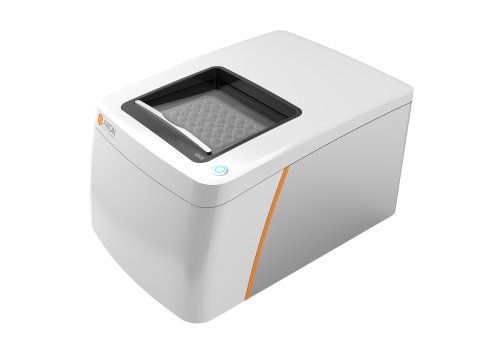
Using Axion BioSystems’ MEA system, the team recorded spontaneous and electrically evoked activity from iPSC-derived cortical neurons after exposure to 0, 25, or 100 mM ethanol. Ethanol-treated neurons showed reduced mean firing rate and spike counts, with stronger effects at higher ethanol concentrations. Raster plots and heat maps further showed diminished firing events and reduced network synchrony. When neurons were electrically stimulated, ethanol exposure again reduced evoked mean firing rate and spike counts, indicating impaired responsiveness as well as suppressed spontaneous activity.
These functional deficits occurred alongside reduced neuronal and synaptic maturation markers, altered excitatory/inhibitory and glial-associated marker expression, increased amyloid-beta accumulation, elevated phosphorylated tau, and reduced neurite complexity in 3D models. Together, the findings suggest that chronic ethanol exposure can impair neuronal maturation and network function while promoting Alzheimer’s disease-related molecular changes in human iPSC-derived neural models.